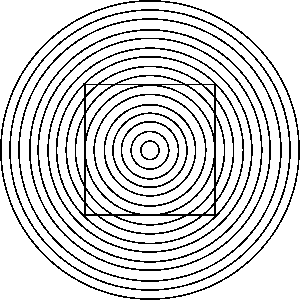
Well, can you?
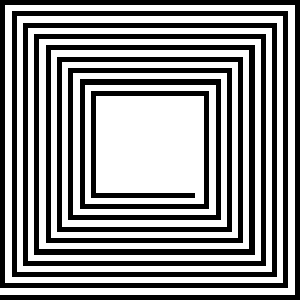
Are these actually squares?
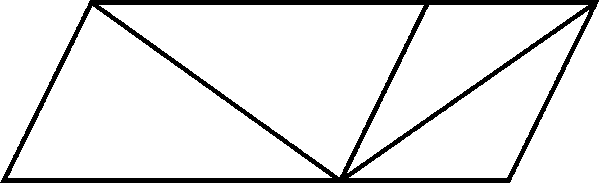
Sander Paralelogram ~ 1926
Measure the diagonals - you'll be surprised
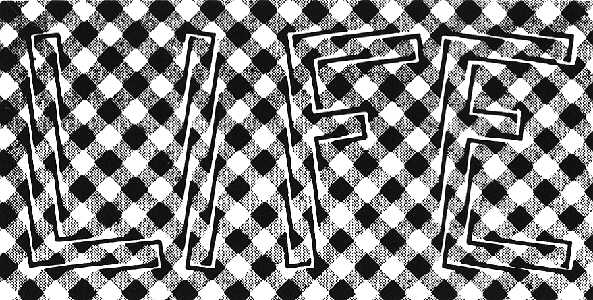
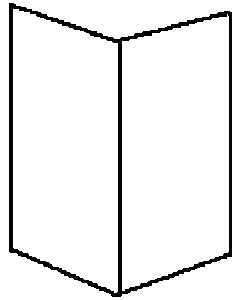
Are you looking at the inside or the outside of this card?
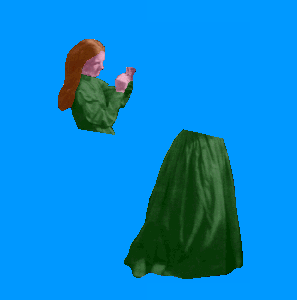
Look at this picture for a couple of seconds and bring your face closer to the screen.
The woman will seem to join herself back together.
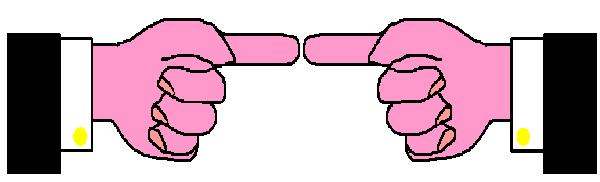
Sausage Fingers
The above picture reminded me of a childish amusement.
Hold your hands with the tips of your index fingers touching.
Bring your hands towards your eyes.
Hey presto! Sausage fingers.
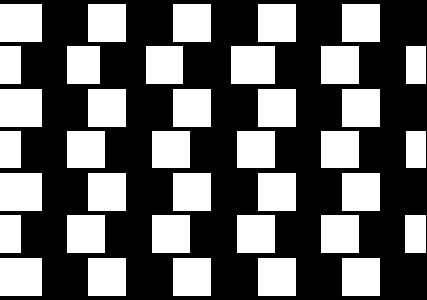
Offset Lines
There are optical illusions where the vertical or horizontal lines between geometric patterns appear to be offset or look like waves. Several of these illusions were found in real life and then described rather than being invented.
Münsterberg illusion
The above illusion was discovered by psychologist Hugo Münsterberg who described it in 1894. He found the illusion on an American horse-drawn tram subscription card. The vertical line running between the columns of shapes appears to lean to one side.
Kindergarten illusion
The Kindergarten illusion wss first described by A. H. Pierce in 1898. He found the pattern in mat- or rug- making patterns. The vertical lines in the pattern appear to be wavy instead of straight.
Cafe Wall Illusion
Are these rows really parallel?
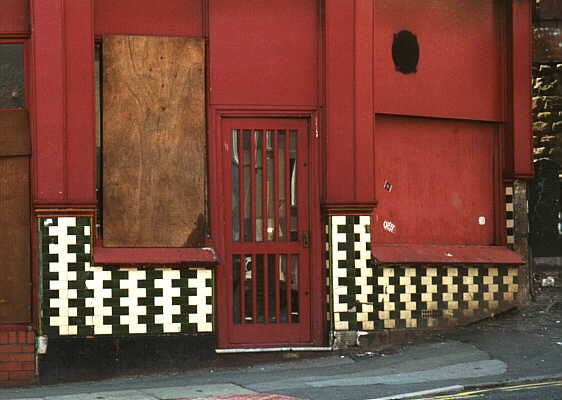
The illusion was named after Steve Simpson, a member of psychologist and Professor of Neuropsychology Richard Gregory's team, noticed the illusion in the wall tiles of a cafe at the bottom of St. Michael's Hill in Bristol in 1973.
I visited the cafe in 1999, it had closed down, but the tiles and pattern were still visible through the grime.
Thanks to Peter Shearn for reminding me of this building at the bottom of St Michaels Hill, Bristol
Please scroll down for some more pictures of the tiles
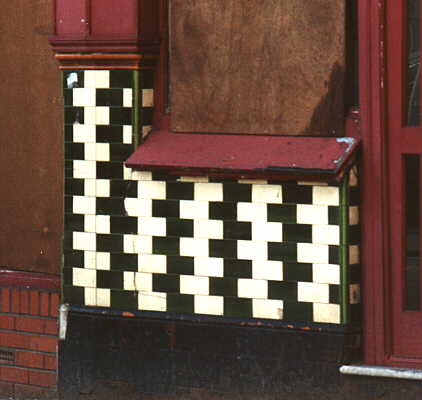
This really is an optical illusion, the tiles are perfectly rectangular!
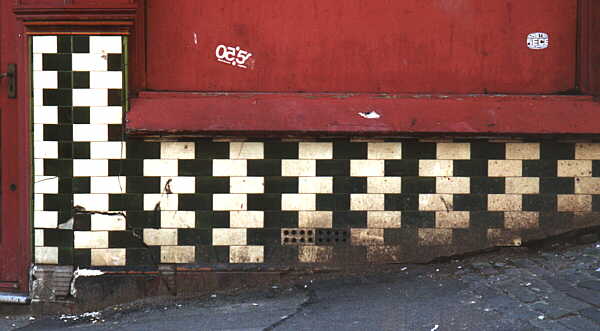
Even when damaged and dirty the illusion shows through!
The cafe has changed several times over the years, but the wall and its tiles are still there.
The cafe at the bottom of St. Michael's Hill, Bristol in 2025
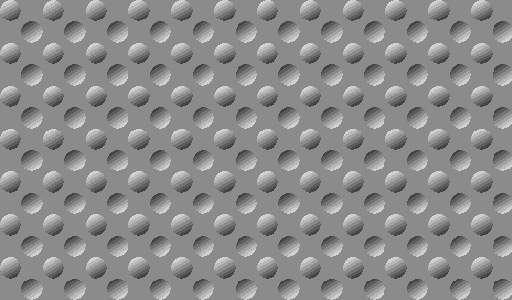
How can a two dimensional image show bumps and hollows?